Workshops & Retreats
Space for your inner process
Holotropic Breathwork in Slovenia
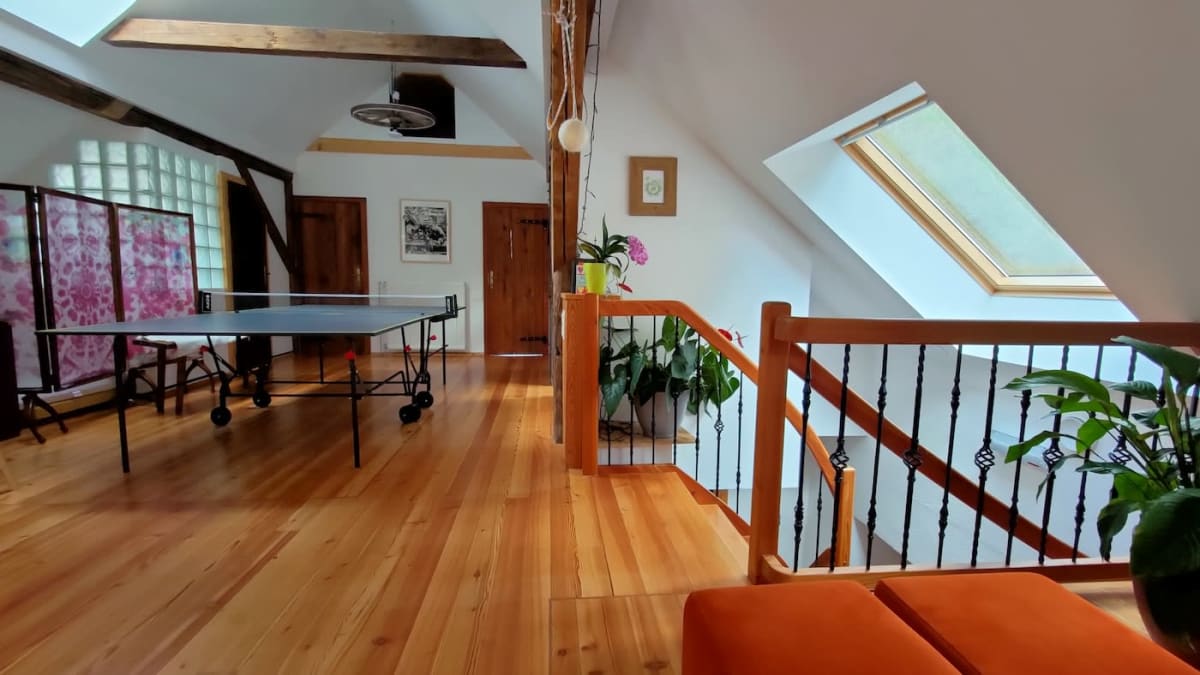
Čudovit retreat center v osrčju slovenskega podeželja
Odkrijte vikend intenziv, zasnovan v slogu retreata, v osrčju Slovenije. Namenite dva polna dneva, da se odmaknete od vsakdana in se potopite v osredotočeno, izkustveno delo v podporni skupini. Več o našem centru.
Prihajajoče delavnice 3
Oglejte si, kaj se dogaja v centru Velosimed.
Holotopic Breathwork Intensive October 2026
What is Holotropic Breathwork: Holotropic Breathwork™ is a powerful approach to self-exploration and personal empowermen...
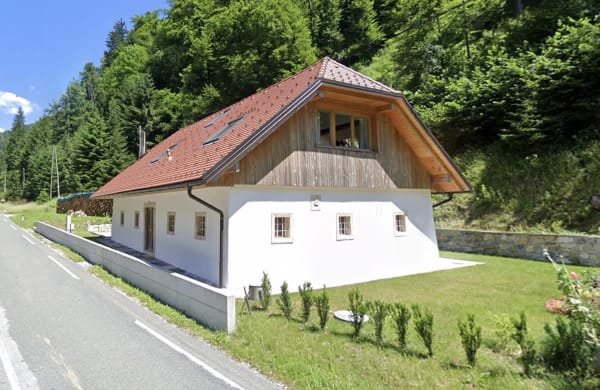
Velosimed Center, Preddvor

Holotopic Breathwork Intensive November 2026
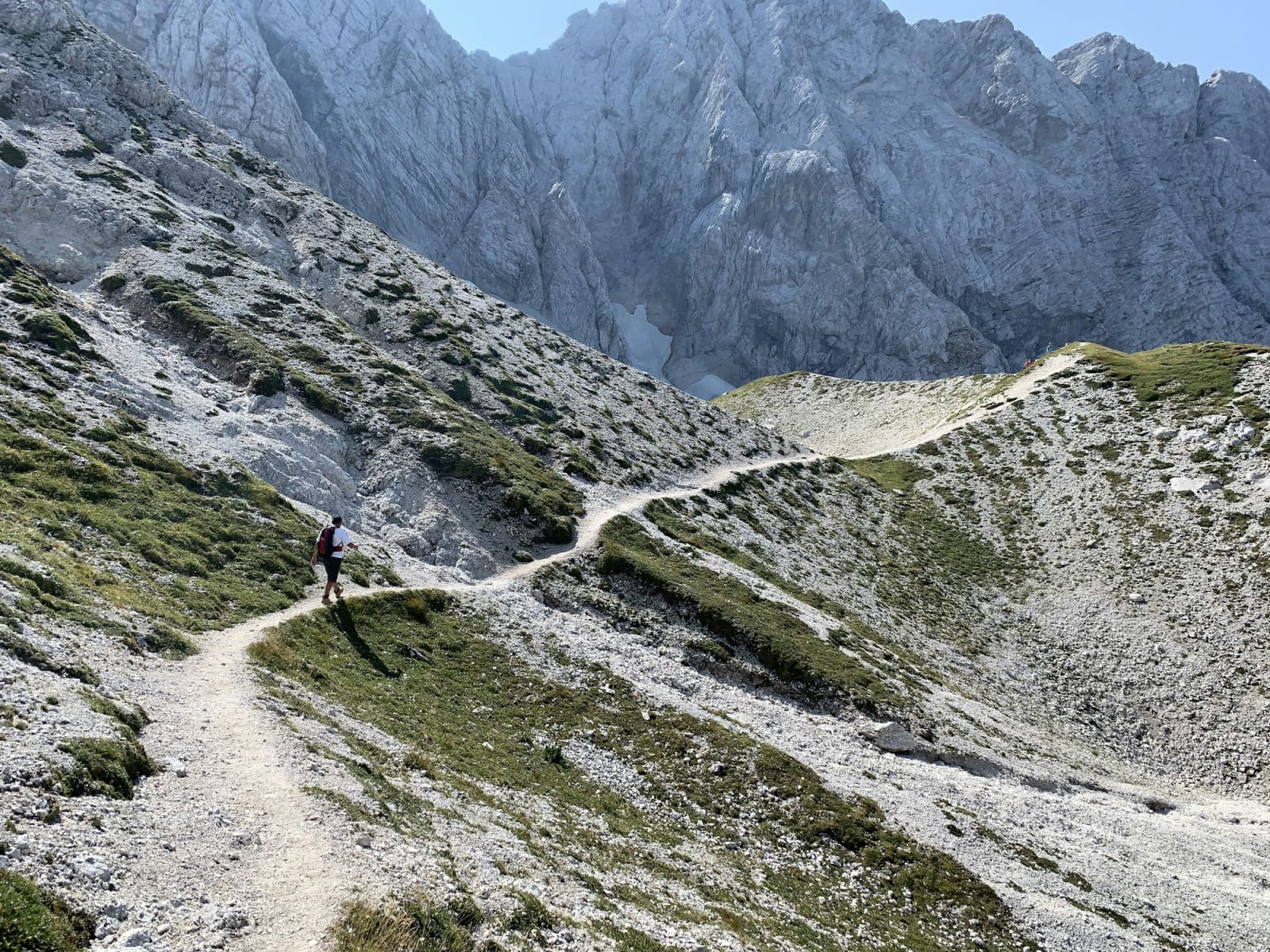
Important for GTT students/practitioners: this particular workshop will fulfill the virtual module requirement. Holotropic Breathwork® workshop takes place in the Velosimed Center, in a beautiful setting under the mighty Kočna mountain.
Velosimed Center, Preddvor

Holotropic Breathwork Integration Workshop: December 2026
This is a special Holotropic Breathwork Workshop for seasoned holonouts, who would like to deepen the depth of integration and understanding (in the broader sense of the meaning) of your holotropic journeys so far. It can be your holotropic work done through Holotropic Breathwork, psychedelic thera
Velosimed Center, Preddvor
Spoznajte holotropno dihanje v Sloveniji
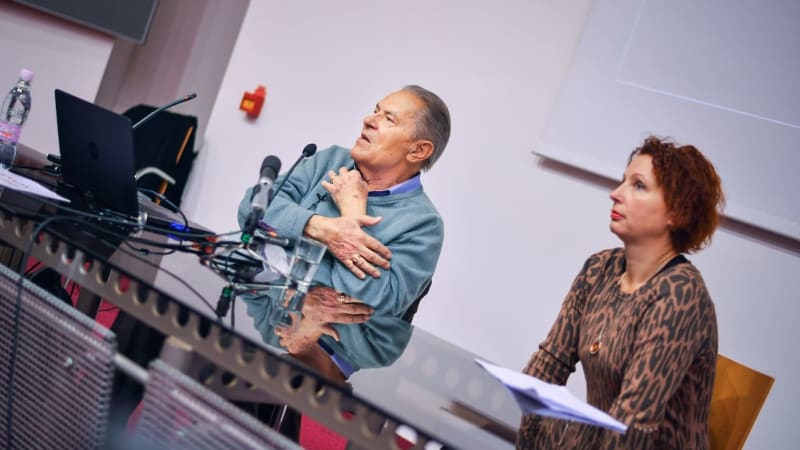
The work of Stanislav Grof
The founder of Holotropic Breathwork and of a new cartography of the human psyche
Read more →

Naša ekipa
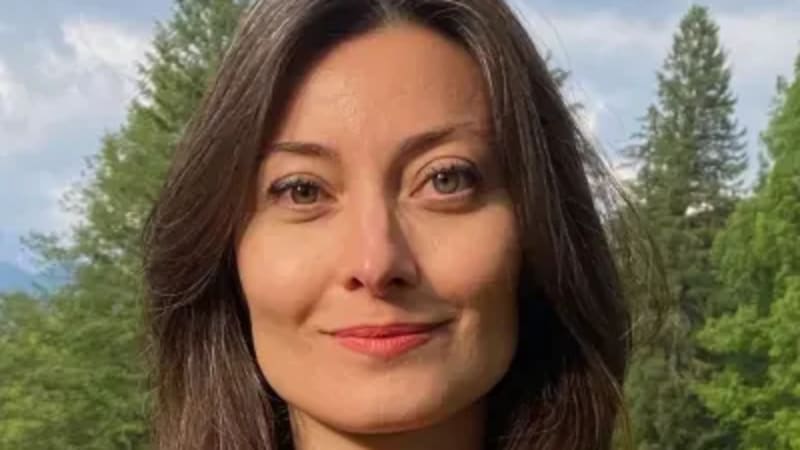
Maja Petrovic Steger
Maja has always been interested in the conditions, both societal and personal, of people seeing the world and coming to...
View profile →

Pogosta vprašanja o holotropnem dihanju
Does Holotropic Breathwork involve drugs?
No. Never.
Grof was one of the earliest and most respected researchers in the clinical use of LSD. A Freudian analyst and psychiatrist, he became convinced that LSD had therapeutic value as a catalyst for the healing potential of the unconscious. Grof conducted LSD treatment at the Psychiatric Research Institute in Prague from 1960 to 1967 and continued this work at Johns Hopkins University, Baltimore. He worked with psychiatric patients, cancer patients, and drug addicts, as well as with artists and scientists who were curious about the deeper dimensions of their minds.
At the time, there were a variety of ways of working with LSD, but Grof’s method was remarkable for the use of a very safe setting and its inner focus. This involved the patient lying down with eyes closed, listening to music, and being attended at all times by two clinicians. Thus the focus was on inner experience, rather than interactive or psychodynamic experience, and on accessing the unconscious experientially, rather than intellectually, verbally, or analytically. Grof observed and reported remarkable therapeutic benefits for his patients from this process. Furthermore, he realized that these states of consciousness were not nearly as nonordinary as they seemed: most pre-industrial cultures had some culturally-sanctioned way to enter these states, periodically, to promote healing or find wisdom, using things like drumming, natural psychedelics, meditation, or fasting as the catalyst. Grof’s clinical research into LSD was extremely promising, but because of the street use of the drug, and its promotion by less sober figures such as Timothy Leary, the non-clinical use of the drug was banned in the U.S. in 1967, and clinical research ended in 1975. So he turned his attention to other methods of inducing a non-ordinary state of consciousness and settled on the use of deep, fast breathing. This is the basis of Holotropic Breathwork™. Although Holotropic Breathwork has some of the similarities, in setting and intention, of Grof’s work with LSD, a Holotropic Breathwork session absolutely does not involve drugs. As with many forms of yoga, it is powered by simply breathing, at a rate controlled by the client.
Is the facilitator a healer?
The primary principle of Holotropic Breathwork is that healing comes from within the client. In the holotropic model, this is taken to an unprecedented level of trust. And this, in turn, empowers the participant. Facilitators are not considered to be healers or even therapists. Rather, they are more like mid-wives, there to support a process that has an inherent wisdom. Facilitating a Holotropic Breathwork workshop is an intense practice in ‘not knowing’. I recall Grof saying that the reason the training to be a facilitator takes a minimum of two years is that it takes at least two years to realize how little you know and that the human mind is infinite.
Grof believes that there is an inner ‘radar’ function in the psyche that, when given the opportunity, can choose the most relevant experience we need, at that moment, for our evolution. No one can know what that experience is, in advance. For example, consider a client locked in a pattern of anger at her mother: what would be the best prescription for her? A bio-energetic therapist might encourage her to express her rage. A Buddhist teacher might encourage her to practice compassion. A Jungian might encourage her to dialogue with the image of her anger. A Kundalini yogi might encourage her to channel the anger into a higher form. But a Holotropic Breathwork facilitator would say simply, “keep doing the breathing and find out what is emerging for you.” The answer is specific to the client and to the time.
It is always tempting to think we ‘know best’. This is particularly true for anyone in the helping professions. But the Holotropic Breathwork facilitator is trained in not-knowing. Of course, many people have great gifts in their chosen modalities, whether craniosacral therapy, reiki, bioenergetics, psychodynamic psychotherapy, or cleansing auras, but in a holotropic workshop these would never be applied to a client’s process. To ‘heal someone’ is a beautiful thing, but in the context of a Holotropic Breathwork workshop, it would be considered an abuse of power. Each participant should leave a Holotropic Breathwork workshop feeling personally empowered: having discovered that he himself has answers within—not that so-and-so is ‘a great healer’. The Holotropic Breathwork facilitator is not expected to do the healing and should not promote the idea of being a healer. The facilitator of a Holotropic Breathwork session is there to help, support, and encourage clients to find their own way.
Many clients do come to a Holotropic Breathwork workshop wanting ‘to be healed,’ or with an unconscious need to find a guru. This can be a trap for both the client and the facilitator. But a good facilitator will resist that projection, and gently encourage the client to look for an answer within. Of course, some facilitators do have a strong healing presence, or maybe gifted in ‘seeing’ or understanding. But all good Holotropic Breathwork facilitators should keep that firmly in check: the practice of being a facilitator is of not-knowing and giving space to individuals to find the answers themselves.
Is Holotropic Breathwork a kind of shamanism?
There are many ways in which Holotropic Breathwork resembles shamanism. As in shamanism, participants in a Holotropic Breathwork workshop go on a journey into a non-ordinary state of consciousness to find healing. Music is played to support this journey. But there are many differences between Holotropic Breathwork and shamanism. First, there is no roadmap for the Holotropic Breathwork journey: participants are not asked to imagine an entrance to a shamanic world and don’t begin their holotropic journey with an intention to work on a specific problem or question. It certainly makes sense to look for a spirit guide or power animal at a shamanic workshop, for these are typical features of the shamanic world, but to do this in a holotropic session would constrain the process. In a holotropic session, the whole world of possible spiritual experience, from any tradition (and from no tradition), is available to each client.
One of the most remarkable features of Holotropic Breathwork is that people can have so many different kinds of experiences, and are free to interpret them differently, without any specific language or worldview. I have seen Christians having Buddhist experiences, and Hindus having Christian experiences. I have seen atheists have shamanic experiences and shamanic practitioners have Sufi experiences. (I even remember a Catholic priest having a Christian experience, and expressing surprise and delight to discover what his faith was really about.) I have also seen people have experiences that seem to pull from many different traditions at once and have seen some people have experiences from no tradition yet identified. So although Holotropic Breathwork has many features that are similar to shamanism, it is much bigger and broader. In this sense, it is a truly post-modern practice.
Zakaj so naši retreati posebni?
Majhne skupine
Retreate namenoma ohranjamo majhne, da je za vse udeležence na voljo dovolj podpore.
Izkušeno spremljanje
Vsak od naših voditeljev ima desetletje izkušenj z ustvarjanjem prostorov, ki podpirajo razširjena stanja zavedanja.
Format 2 + 2
Popolnoma poglobljena izkušnja holotropnega dihanja, pri kateri je lahko sedenje enako močno kot dihanje.